This continues the introduction to the study of the Apostle Paul’s letter to the Romans. First is the formal introduction of the letter:
“Paul, a servant of Christ Jesus, a called apostle, set apart into the gospel of God [2] which He promised beforehand through His prophets in the Holy Scriptures. [3] concerning His Son, the one having come out of the seed of David according to the flesh, [4] who having been designated the Son of God in power according to the spirit of holiness in the out of resurrection from the dead, Jesus Christ our Lord” — Rom. 1:1-4 [1]
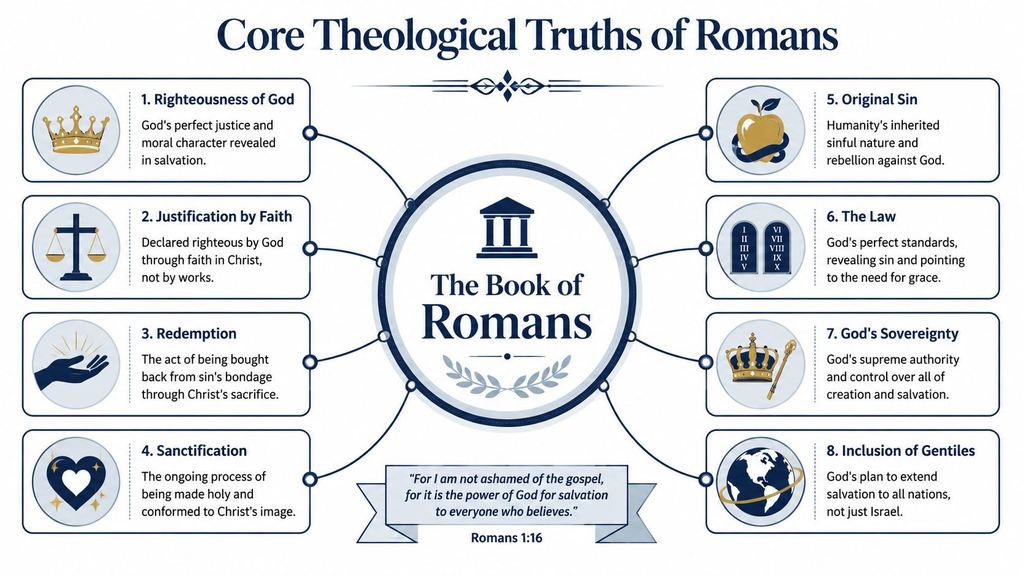
Paul introduces himself and his ministry as one who was “called” an “apostle,” whom God “set apart into the gospel of God,” revealed through the Old Testament “prophets” (See Heb. 1:1, 2). As one formerly identified as Saul of Tarsus, his ‘calling’ and ‘mission’ was specific, Annias was instructed to: “…“Go, for he is a chosen instrument of Mine, to bear My name before the [nations] Gentiles and kings and the sons of Israel; for I will show him how much he must suffer for My name.” (Acts 9:15, 16 LEB). As is revealed in his other letters, the apostle Paul was given the focus of his ministry in being “apostle of the nations” (gentiles) (Rom. 11:13; I Tim. 2:7).
Christ as having come from the “seed of David according to the flesh” is the central focus of the letter for bringing about unity and solidarity between Israel and the people coming into the church from outside the covenant community of the “nations.” The glorification of Christ as the victorious “Son of God” was proven in His “out resurrection” from among the “dead (ones)” (ἐξ ἀναστάσεως νεκρῶν) through the power of the Holy Spirit. Max King in his book, The Cross and the Parousia of Christ makes this observation:
“It is here that the resurrection enters into the eschatological mission ofthe Spirit. The Spirit gives life (Rom. 8:2; 2 Cor. 3:6), not merely by revealing things to be believed, but by enabling the believer to experience the mode of existence of the new aeon in advance of the end of the old. But how is this made possible? Can the believer be a man of two aeons; that is, of two covenants at the same time? At this point we need to see the significance of Christ’s death and resurrection in relation to the resurrecting power of the Spirit. Whom does the Spirit quicken, except those who are dead? Christ (the firstfruits) was quickened by the Spirit because He first became obedient unto death. His death was related essentially to the purpose of His resurrection, and both events were in view of His entering into His Messianic reign. He was “put to death in the flesh but quickened by the Spirit” (1 Pet. 3:18), in order to establish His reign in the realm of the promise. As shown in Isaac’s birth, the realm of the promise is “in the Spirit” rather than “in the flesh” (Gal. 4:21-31). What stands before Paul’s mind is the contrast between the old and new aeons as determined by the two covenants.” [3]
Throughout this study of Romans the relationship between the two covenants will be more clearly understood with reference to what God was going to accomplish during the “last days” (Joel 2:28-32; Acts 2:16-21). The Old Covenant “ministry of death” (II Cor. 3:7) was being “brought to an end” and the New Covenant “ministry of righteousness” was being established with far greater glory (II Cor. 3:7-11). This transformation over the forty years of “last days” was certainly progressive bring genuine freedom from the bondage of sin and death. Paul writes: “Now the Lord is the Spirit, and where the Spirit of the Lord is, there is freedom. But we all, with unveiled face, beholding as in a mirror the glory of the Lord, are being transformed into the same image from glory to glory, just as from the Lord, the Spirit” (II Cor. 3:17, 18).
For the Corinthians this was “from glory to glory” (II Cor. 3:18), for the Romans it was “out of faith into faith”(Rom. 1:17). The “faith” as revealed and determined by the Old Covenant was transitioning “into faith” as determined by the New Covenant. The study of this letter is beneficial in a number of ways:
√. It clarifies the gospel: People learn that justification by faith isn’t a slogan. It’s the ground of peace with God.
√. It exposes false confidence: Romans doesn’t let religious effort pretend to be saving righteousness.
√. It builds unity: The letter addresses Jews and Gentiles together, which means it speaks powerfully to churches learning to live as one people in Christ.
√. It strengthens endurance: Romans gives language for suffering, hope, and life in the Spirit. [4]
Here is a brief outline of what will be studied in Romans:
Outline of Romans
| Introduction | 1:1–15 |
| A. Prescript | 1:1–7 |
| 1. The author | 1:1–6 |
| 2. The addressees | 1:7a |
| 3. The greetings | 1:7b |
| B. The Thanksgiving | 1:8–12 |
| 1. The thanksgiving | 1:8 |
| 2. An oath | 1:9 |
| 3. A prayer sigh | 1:10 |
| 4. The reasons | 1:11–12 |
| C. The Disclosure Formula | 1:13–15 |
| 1. The formula | 1:13 |
| 2. The obligation | 1:14 |
| 3. The desire | 1:15 |
| D. The Thesis (Proposition) | 1:16–18 |
| 1. The thesis | 1:16 |
| 2. The explanation | 1:17–18 |
| a. The Gospel reveals the righteousness of God | 1:17 |
| b. The Gospel reveals the wrath of God | 1:18 |
| The Argument | 1:18–15:13 |
| A. The Revelation of the Wrath of God | 1:18–3:20 |
| 1. The impartial judgment of God on all peoples | 1:18–2:11 |
| a. The thesis | 1:18 |
| b. The elaboration | 1:19–2:10 |
| 1) the inexcusability of humanity | 1:19–21 |
| 2) the just retribution of God | 1:22–2:3 |
| 3) the revelation of God’s righteous judgment | 2:4–5 |
| 4) the judgment according to works | 2:6–10 |
| the principle | 2:6 |
| God will render to each according | |
| to works | 2:7–10 |
| A—reward, good works | 2:7 |
| B—punishment, bad works | 2:8 |
| B—punishment, bad works | 2:9 |
| A—reward, good works | 2:10 |
| c. The conclusion—divine impartiality | 2:11 |
| 2. The equality of Gentiles and Jews before God’s judgment | 2:12–29 |
| a. General statement—the equality of judgment in relation to the law | 2:12–13 |
| b. The test cases | 2:14–27 |
| A Gentiles—they do the law | 2:14–16 |
| B Jews—they transgress the law | 2:17–24 |
| B Jews—they cannot claim circumcision without obedience | 2:25 |
| A Gentiles—they are circumcised if they keep the law | 2:26–27 |
| c. General statement—the relation of circumcision and obedience | 2:28–29 |
| 3. The objections of the Jews | 3:1–20 |
| a. The diatribe | 3:1–9 |
| b. The scriptural warrant | 3:10–18 |
| c. The conclusion | 3:19–20 |
| B. The Revelation of the Righteousness of God | 3:21–11:36 |
| 1. The revelation of God’s righteousness | 3:21–26 |
| a. The revelation | 3:21–22a |
| b. The means | 3:22b–25a |
| c. The purpose | 3:25b–26 |
| 2. One God makes righteous all people on the basis of faith | 3:27–4:25 |
| a. The dialogue | 3:27–4:2 |
| b. The exposition of scripture | 4:3–25 |
| A the text (Genesis 15:6) | 4:3 |
| B the meaning of “reckon” | 4:4–8 |
| B the meaning of faith | 4:9–21 |
| A the text (Genesis 15:6) | 4:22 |
| the meaning for Christians | 4:23–25 |
| 3. The meaning of the revelation of the righteousness of God through the faithfulness of Jesus | 5:1–8:39 |
| A Peace with God | 5:1–11 |
| 1) the basis | 5:1a |
| 2) the exhortations | 5:1b–8 |
| 3) the basis | 5:9a |
| 4) the benefits | 5:9b–11 |
| B Victory of Christ over sin | 5:12–21 |
| 1) the origin of death | 5:12–14 |
| 2) the comparison of Adam and Christ | 5:15–21 |
| C Death of the old humanity | 6:1–7:6 |
| 1) first question | 6:1 |
| 2) second question | 6:15 |
| 3) third question | 7:1 |
| B Victory over the flesh/sin via the Spirit | 7:7–8:11 |
| 1) the weakness of the law due to flesh/sin | 7:7–25 |
| 2) the fulfillment of the law through the victory of Christ and the Spirit | 8:1–11 |
| A Children of God | 8:12–39 |
| 1) the Spirit and family relationships | 8:12–17 |
| 2) the triumph of glory over suffering | 8:18–30 |
| 3) the triumph of God in Christ | 8:31–39 |
| 4. The faithfulness of God to Jews and Gentiles | 9:1–11:36 |
| a. The lament of Paul for Israel | 9:1–5 |
| 1) oath | 9:1–2 |
| 2) wish | 9:3 |
| 3) privileges | 9:4–5 |
| A God’s word has not failed | 9:6–29 |
| 1) thesis statement | 9:6a |
| 2) statement 1: God’s call rather than birth determines Jewish ancestry | 9:6–13 |
| 3) statement 2: God’s sovereignty is just and serves God’s purposes of wrath and mercy | 9:14–21 |
| 4) statement 3: God’s election purposes a new people | 9:22–29 |
| B Christ is the fulfillment of the Word of God | 9:30–10:21 |
| 1) Israel pursued the law and righteousness incorrectly | 9:30–10:3 |
| 2) Christ is the goal of Jew and Gentile | 10:4–13 |
| 3) the gospel is for all who hear | 10:14–21 |
| A God has not rejected Israel | 11:1–32 |
| 1) diatribe—the remnant and the rest | 11:1–10 |
| 2) diatribe—the importance of Israel’s future salvation | 11:11–24 |
| 3) assertion—the mystery of salvation for Jews and Gentiles | 11:25–32 |
| 4) doxology | 11:33–36 |
| C. The Living Sacrifice of the Righteous Community | 12:1–15:33 |
| A The Exhortation Formula | 12:1a |
| B The Living Sacrifice | 12:1b—2 |
| A The Renewal of the Mind | 12:3–16 |
| A the frame—think correctly | 12:3 |
| B to live as the body of Christ | 12:4–8 |
| B to love without hypocrisy | 12:9–15 |
| A the frame—think correctly | 12:16 |
| B Repay Only the Good | 12:17–13:10 |
| A The Renewal of the Mind | 13:11–14 |
| B Welcome Differences | 14.1–5:13 |
| • welcome the weak one | 14:1–12 |
| • welcome one another | 15:7–13 |
| B Sacrifice by the Gentiles | 15:14–29 |
| A The Exhortation Formula | 15:30–32 |
| CONCLUSION | 15:33–16:27 |
| Peace Greeting | 15:33 |
| Letter of Recommendation for Phoebe | 16:1–2 |
| First Greeting List | 16:3–16 |
| Final Exhortations | 16:17–20a |
| Grace Benediction | 16:20b |
| Final Greetings | 16:21–23 |
| Doxology | 16:25–27 |
While it may appear this letter is complicated, it will be seen that a beautiful picture of God’s “purpose of the ages” (Eph. 3:11) begins to unfold right before the eyes of the reader. The “righteousness of God” is both related to His nature and also with regard to His “covenant faithfulness” in keeping His promises and confirming the unity and solidarity established “in Christ”
ENDNOTES
[1] Unless otherwise indicated, the Scripture quotations from Romans are by the instructor, directly from the Greek text.
[2] The chart Core Theological Truths of Romans is from “The Bible Seminary” website (https://www.thebibleseminary.edu/post/romans-book-study-1).
[3] Max R. King, The Cross and the Parousia of Christ (Warren, Ohio: Writing and Research Ministry, 1987), 400, 401
[4]. Ibid. The Bible Seminary — Romans Book Study (https://www.thebibleseminary.edu/post/romans-book-study-1)
[5] John E. Toews, Romans, Believers Church Bible Commentary (Scottdale, PA: Herald Press, 2004), 417–20.